 中文
 英文
 俄文


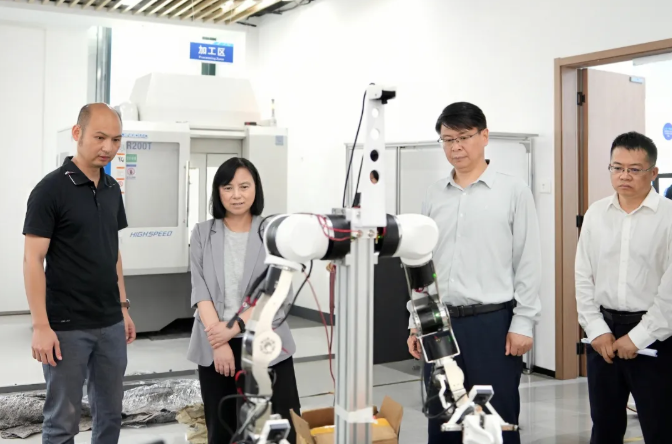
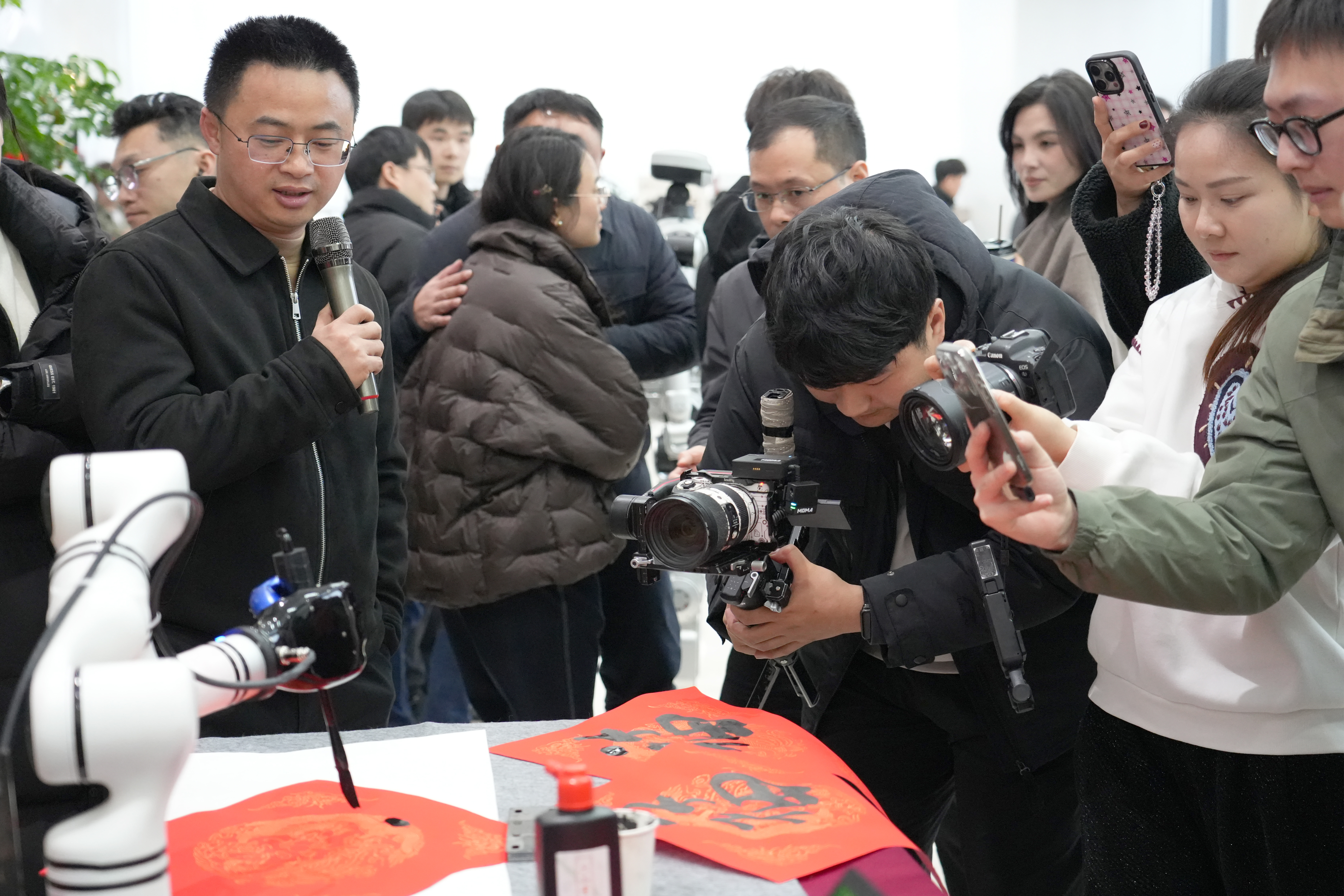
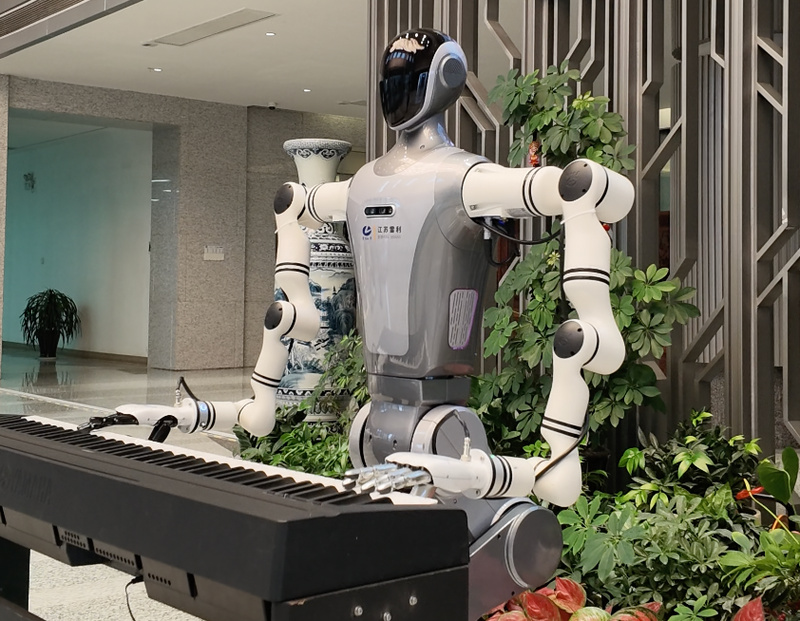
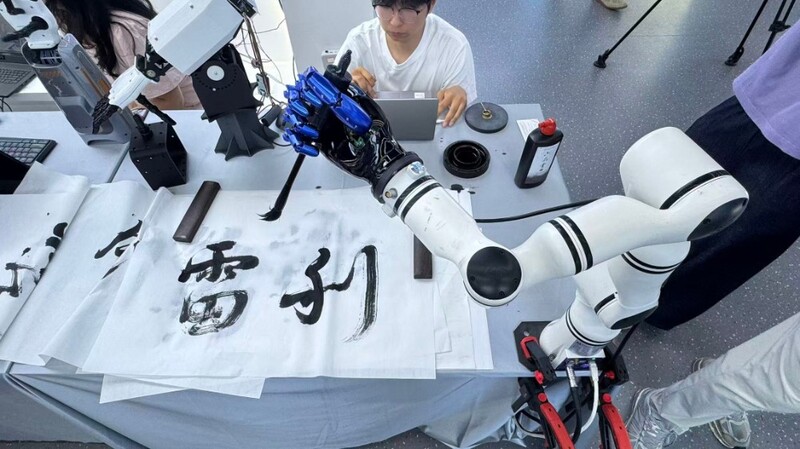
On July 20, the "Dynamic China Investigation Tour" visited Jiangsu Leili Motor Co., Ltd. Inside the workshop, several dexterous hands repeated three movements: grasping motors, straightening wires and fastening cable ties. A full cycle takes only 9 seconds with non-stop operation. At the adjacent demo area, another dexterous hand picked up a writing brush and wrote neat regular script on rice paper; yet another played the piano smoothly, rendering the melodious tune *Fireflies*…
How can a metal machine become an all-round performer? The secret lies in tiny yet powerful "hearts" — micro and special motors.
This piano-playing dexterous hand looks unremarkable. Weighing less than 400 grams and measuring under 16 centimeters, it features 22 degrees of freedom. Its fingers house 8mm micro-motors and fingertip sensors for coordinated joint movement. Wang Shilong, Deputy General Manager of Jiangsu Leili, told reporters that the company has rolled out three types of dexterous hands based on linkage-driven, tendon-driven and direct-drive schemes. The 3rd-generation tendon-driven model boasts 22 degrees of freedom and can precisely grasp tiny objects as small as 5mm in diameter. These delicate motions are powered by the company’s self-developed coreless motors. Unlike conventional motors with iron-core rotors, they adopt self-supporting hollow cup coils for smaller size, faster response and higher energy conversion efficiency.
Talent shows are merely extras. Its true value lies in boosting production efficiency on the factory floor. The Zhongke Lingxi LG-601 linkage dexterous hand has been running stably at the Leili motor workshop in Lu’an, Anhui. In 2025, Jiangsu Leili started small-batch delivery of dexterous hands and sent samples to multiple industrial clients for testing. Beyond motor production lines, the dexterous hands have been deployed in more than ten typical scenarios covering chemical, coal and 3C industries.
Gentler interaction and smarter decision-making mark the clear iteration roadmap for dexterous hands. Wang Shilong held one dexterous hand for demonstration: “Frankly, people used to feel nervous shaking hands with rigid robotic grippers, as they might hurt you with uncontrolled force. Now we can interact with it safely.” This reliability comes from technical upgrades. It senses contact force and adjusts grip strength automatically; it can even pull away actively when excessive pressure is detected. Tactile perception plus coordination between the main and auxiliary control systems defines the evolution direction of next-generation embodied robots. For now, piano-playing, tea-pouring and calligraphy rely on programmed control. In the future, these hands will gain the capability to independently plan and finish tasks after autonomous judgment.
While the technology matures, cost remains a major bottleneck for mass adoption in factories and daily life. “Dexterous hands account for a large share of the total cost of humanoid robots. High pricing is the biggest barrier to large-scale rollout,” Wang Shilong admitted. Nevertheless, a clear cost-reduction path is emerging. Thanks to full-chain independent R&D by domestic suppliers covering materials, motors and drives, the price of domestic dexterous hands has dropped sharply from the million-yuan bracket down to ten-thousand-yuan or even thousand-yuan levels, demonstrating the strength of local supply chains.
Leili’s growth journey mirrors the transformation of Jiangsu’s traditional motor industry. Founded in 1993, the firm began with air conditioner fan motors and holds a 30% global market share. After 2017, it expanded from home appliances to new energy vehicle and medical micro-motors. When the humanoid robot sector heated up at the end of 2023, the company moved swiftly into robotics. Today Jiangsu Leili operates overseas production bases in Vietnam, Mexico, Malaysia and Thailand, with overseas sales contributing roughly 46% of revenue. Jiangsu’s motor industry ranks among China’s top tiers alongside Guangdong. The industrial leap from home appliance motors and EV motors to micro-motors for humanoid robot dexterous hands shows how Jiangsu manufacturing is shifting from scale advantage to technological competitiveness.
Reporters: Wang Mengran, Zhang Jieru, Xinhua Daily · JiaoHuiDian
Reproduced from China Jiangsu Net