 中文
 英文
 俄文


Introduction: It is no toy. It has been running continuously and stably on precision assembly lines, with a tested service life exceeding one million cycles.
“Tendon-driven hands? Aren’t they just for piano-playing demos in labs? They cannot hold up on production lines.” — We have heard this comment more than once.
For a long time, tendon-driven dexterous hands have been labeled as “demo-only”: flexible yet not durable. They perform well for delicate demonstration motions, but tend to fail once deployed on production lines. Under moderate loads or cyclic operation requirements, breakdowns easily occur. Therefore, industrial customers often opt for bulkier linkage-driven hands rather than risking line efficiency on the reliability of tendon-driven solutions.
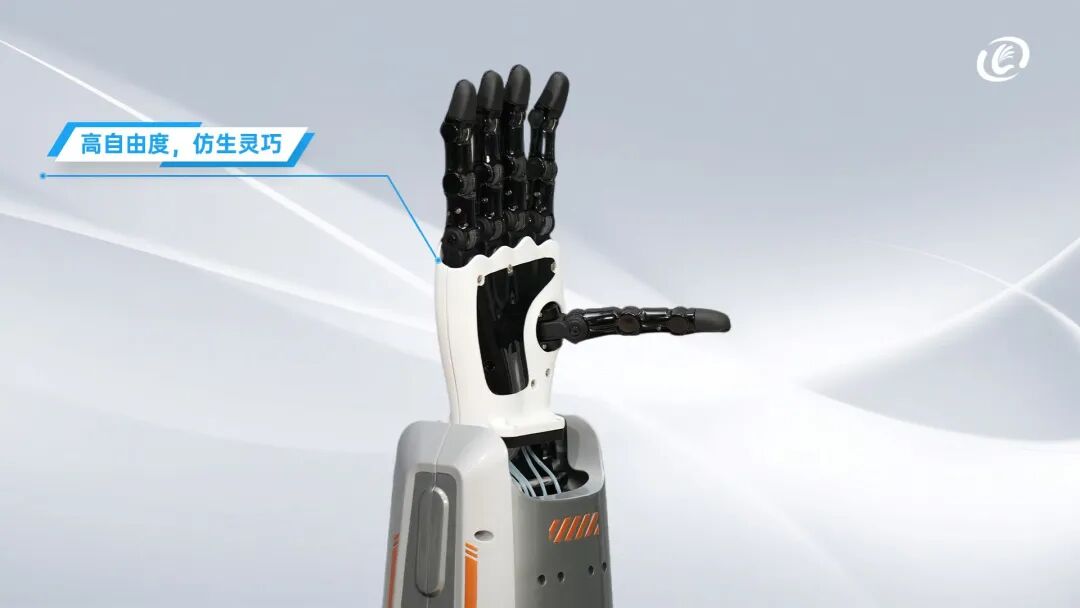
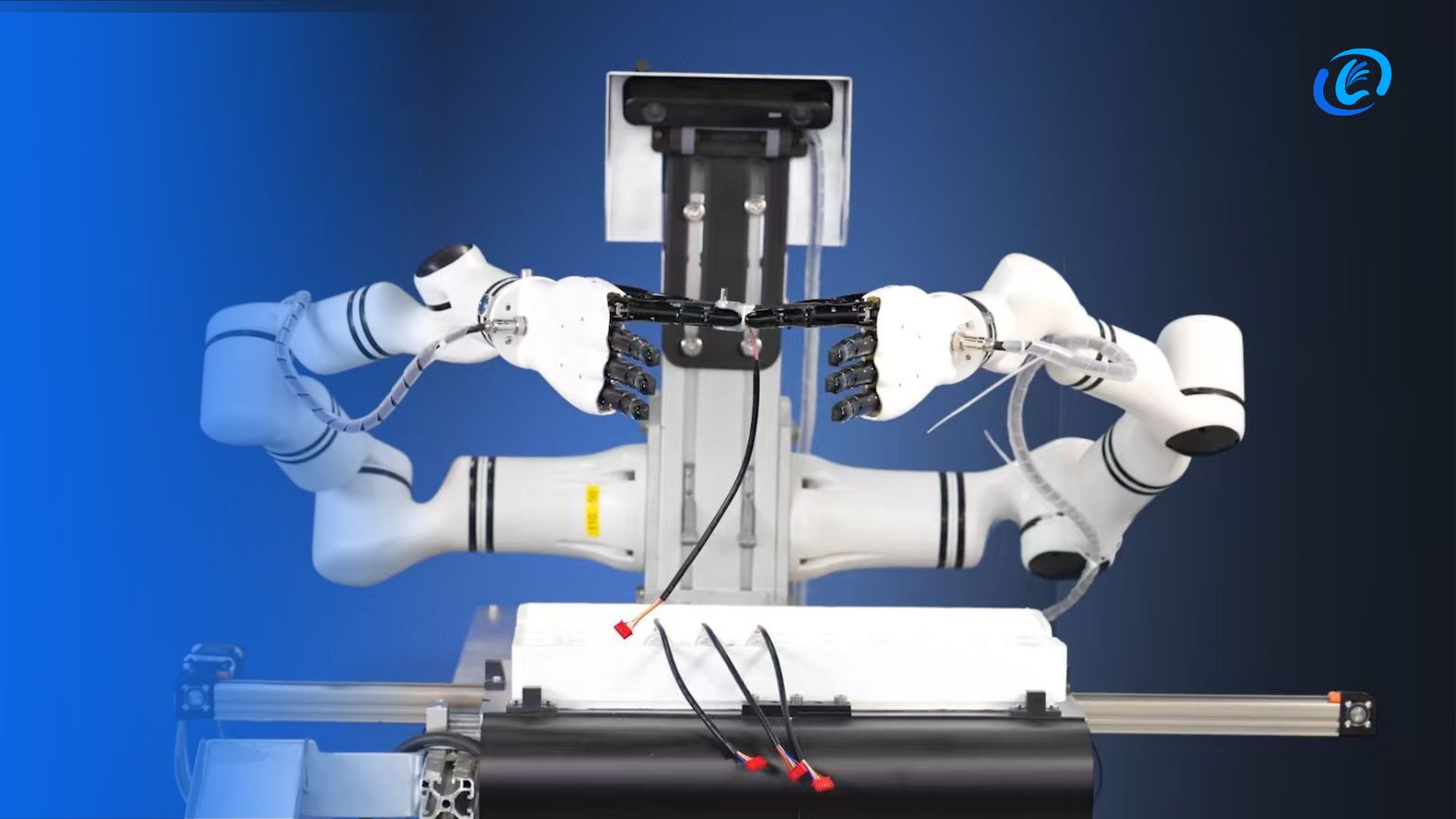
Zhongke Lingxi answers this question with just one product — SQ-1503. Its design goal is straightforward: break the stereotype that “tendon-driven equals toy” and build a true production-grade tendon-driven hand. In fact, it has already achieved stable continuous operation on precision assembly lines, with a verified lifespan surpassing one million cycles.
Ultimately, flashy specifications are not enough. Impressive parameters mean nothing if the fundamentals are weak. Materials, structures and configurations all require bottom-up rethinking before tendon-driven hands can withstand industrial cyclic workloads. That is exactly the design philosophy behind the SQ-1503.
01 Material: Replacing Tendons That “Stretch Over Time”
There is no single reason why tendon-driven hands struggle in industrial settings; the barriers lie in three interconnected aspects: material, structure and configuration.
First, materials.
Traditional polymer tendons are lightweight and low-cost, yet they carry a fatal flaw: irreversible plastic deformation after prolonged cyclic tension. They stretch progressively, causing continuous precision drift. Periodic calibration may work inside laboratories, yet production lines execute tens of thousands of motions per shift. Precision drift translates directly to lower yield rates, and calibration stops bring production to a halt.
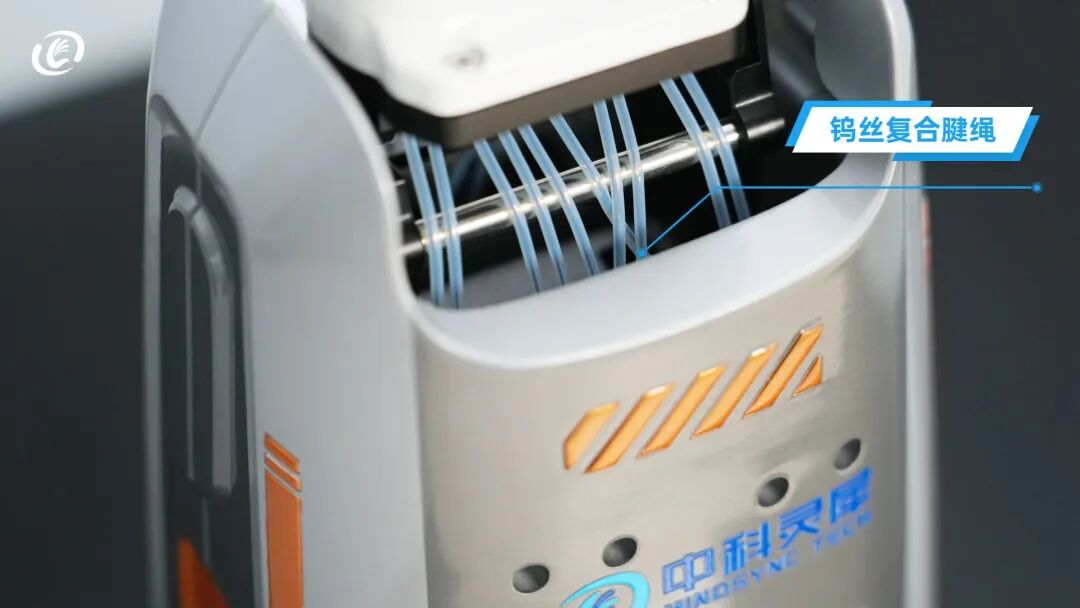
The SQ-1503 adopts tungsten composite tendons.
Tungsten wire boasts tensile strength many times higher than polymer materials and barely creeps under cyclic loading. Composite construction combining tungsten wire and fiber materials retains the flexibility required for tendon transmission while fundamentally mitigating slackening caused by repeated use.
Test results: After one million consecutive cycles, the tendons remain stable without obvious precision degradation. Frequent calibration and unexpected rupture are eliminated, enabling uninterrupted production.
02 Structure: Redesigning Tendon Routing from the Ground Up
The principle of tendon drive is simple: motors pull finger joints via tendons. Complex routing creates extra friction points, leading to energy loss and accelerated mechanical wear.
Conventional tendon-driven designs pursue high degrees of freedom by packing excessive tendons into limited space. Sharp bending angles and poorly arranged pulleys make tendons rub repeatedly against hard edges; fraying and failure are only a matter of time.
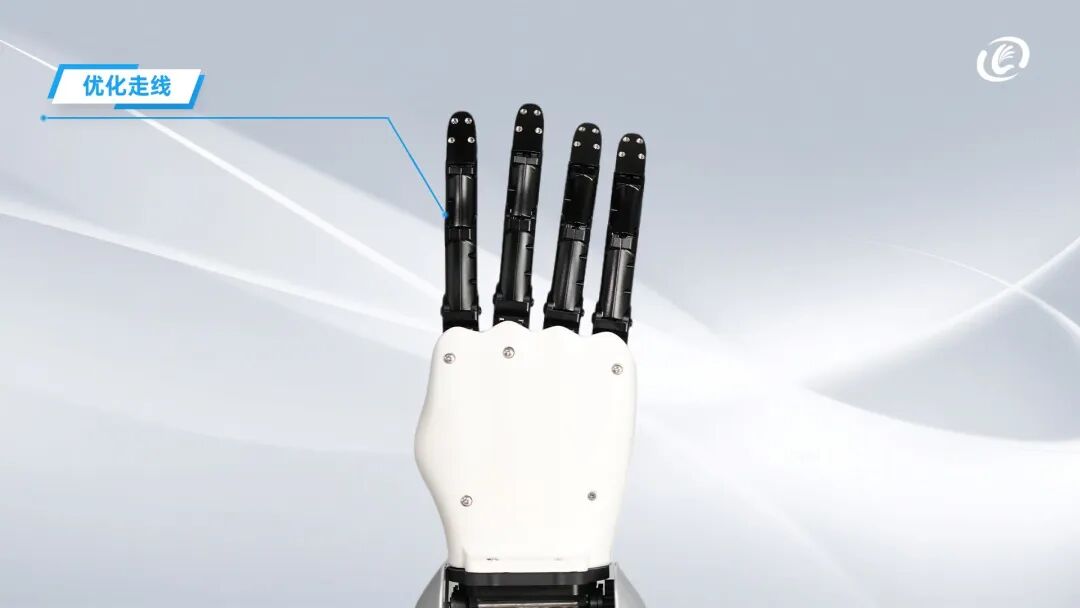
The SQ-1503 takes a minimalist approach: cover essential degrees of freedom with the fewest actuators. Tendon paths are straightened to minimize bending angles, while pulley guiding structures are optimized to eliminate stress concentration points.
The outcome is higher transmission efficiency, longer tendon service life and improved overall reliability. Customer maintenance costs drop, and unplanned line downtime is reduced.
03 Configuration: Customizable Options for Different Workstations
Workstations differ widely in payload, available space and operation tasks. A one-size-fits-all solution may look convenient, yet it either wastes budget on redundant functions or forces costly production line retrofits due to insufficient performance.
The SQ-1503 rejects rigid uniform specifications. It is built on a standard baseline with multiple upgrade modules available on demand.
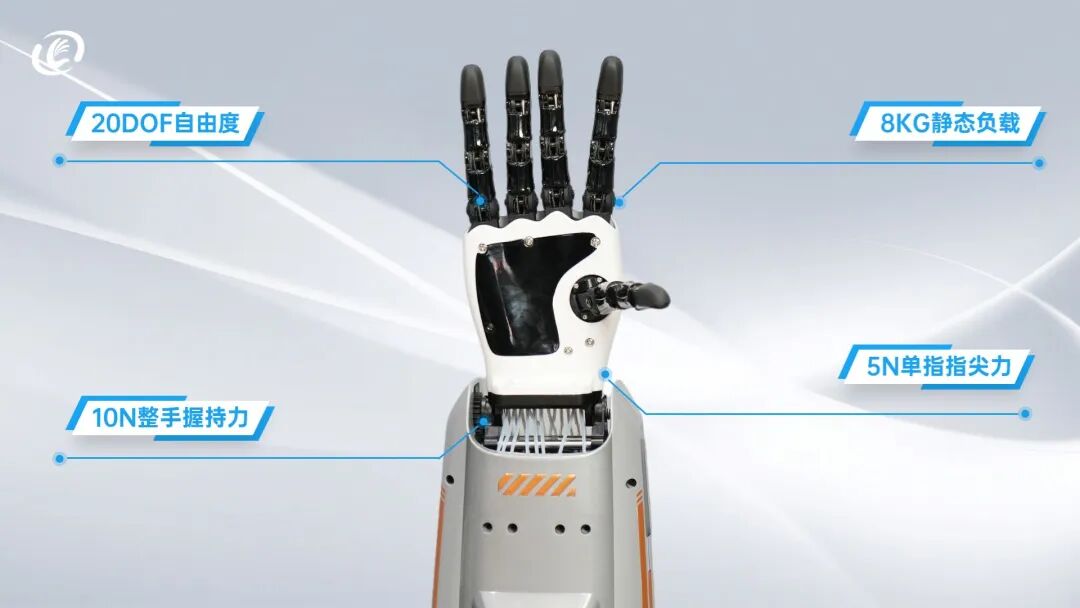
Standard version: 20 DOFs (16 active + 4 passive). Each finger features independent bidirectional drive. Enveloping grip, pinch, lateral swing and fine adjustment are all supported, covering most manipulation tasks with a single end effector.
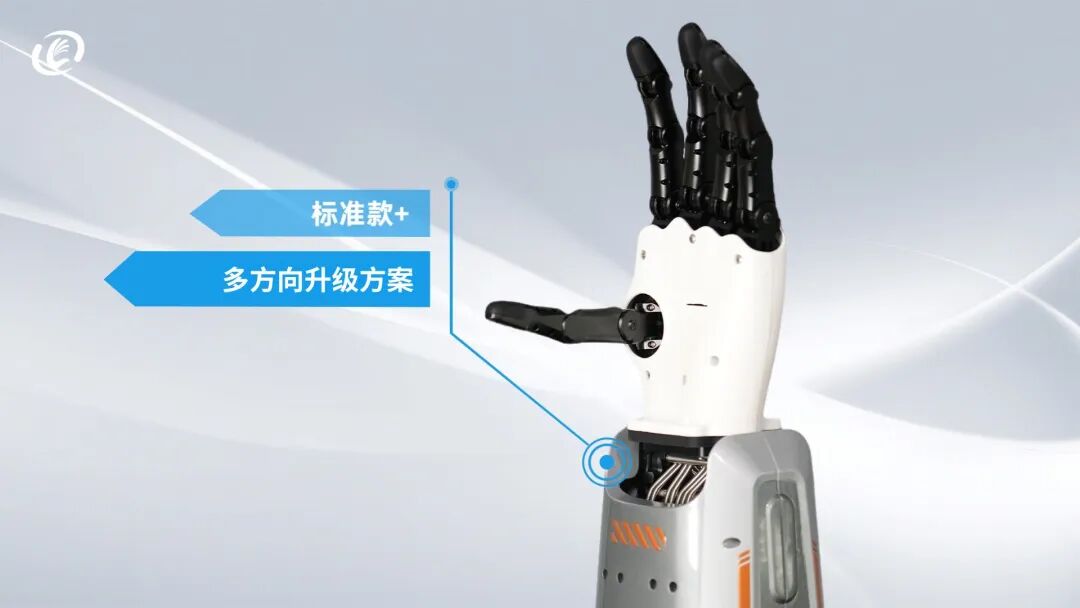
| For space-constrained, low-load stations: compact variant available. Overall hand size is reduced and motor layout reoptimized for a smaller, lighter footprint without compromising functionality.
| For heavy-duty continuous operation: upgrade to aluminum alloy finger joints for enhanced rigidity and wear resistance and extended service life.
| For multi-angle manipulation requirements: add one extra wrist DOF to expand the working posture range, eliminating the need to reconfigure the whole line for specific motions.
Start from the baseline and add upgrades only when needed. No overspending on unused features, no project bottlenecks from mismatched performance.
04 Flexibility: True Agility Means No Fixture Swaps
Fixture swapping on production lines seems trivial but carries substantial costs. Switching product models demands redesign, reinstallation and recalibration, taking anywhere from half an hour to half a day. Production lines and operators wait idle during changeovers.
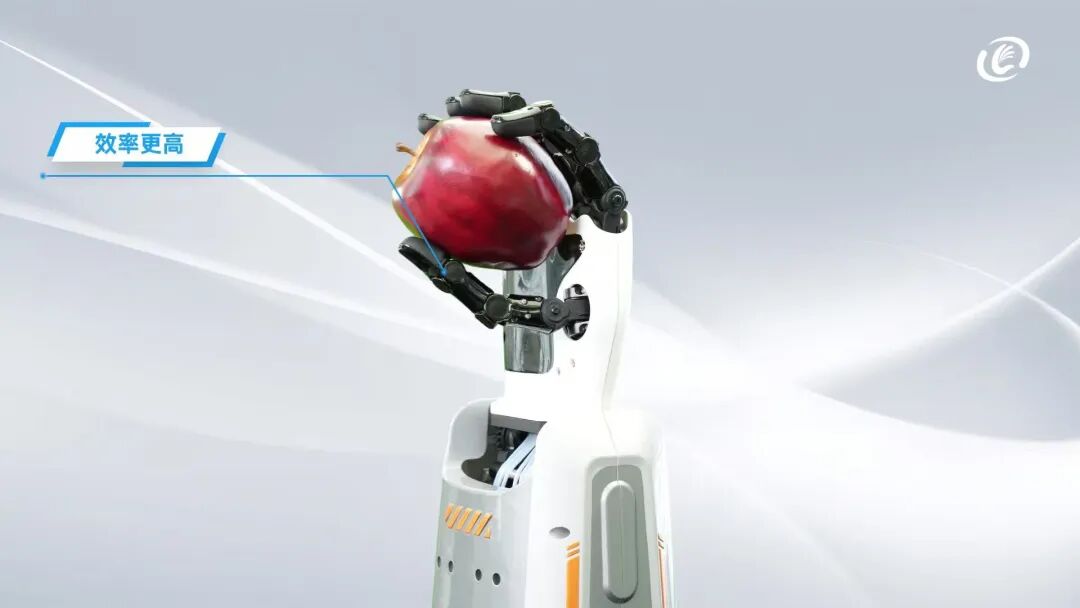
The SQ-1503’s 20 DOFs directly address this pain point: no fixture replacement is required for workpiece changeovers. Square, round and irregular curved parts can all be handled by one end effector. In multi-variant, low-batch production, fixture costs and changeover time are significantly cut.
Uninterrupted operation without fixture swapping during model transitions unlocks the full throughput potential of production lines.
05 Perception: Secure Grasping Without Workpiece Damage
The biggest risk in precision assembly is not failed gripping, but improper force control. Excessive force crushes delicate parts; insufficient force causes slipping.
The SQ-1503 supports optional 6-channel tactile sensors (5 fingertips + 1 palm) that detect contact pressure in real time and automatically adjust gripping force via closed-loop control.
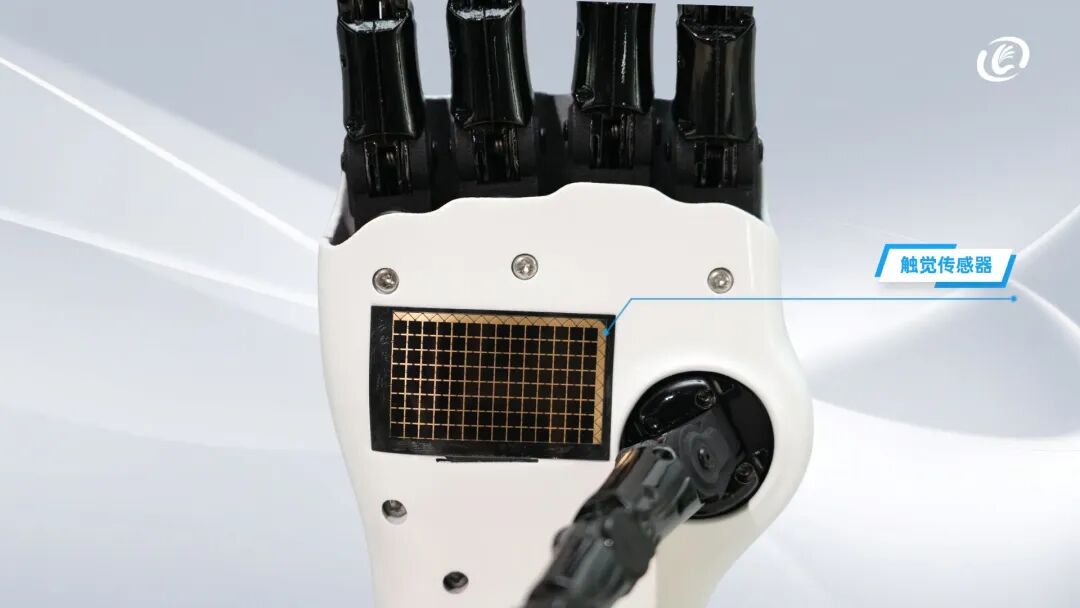
Combined with ±1 mm repeat positioning accuracy, 8 kg rated static payload and fingertip speed of 105°/s, this set of capabilities enables the SQ-1503 to stably grip tiny electronic components as well as fragile lab specimens.
The native compliance of tendon drive, paired with precise tactile feedback, achieves perfectly calibrated grasping — the essence of precision manipulation.
06 Synergy: Two Technical Routes, One Unified Solution
Industrial dexterous manipulation cannot rely on a single hand type alone. Some scenarios demand rigidity: high payload, repetitive cycles and long service life are strengths of linkage-driven hands. Others require flexibility: high DOFs, irregular workpieces and fine assembly suit tendon-driven hands.
Within Zhongke Lingxi’s product portfolio, the LG-601 and SQ-1503 serve these two distinct categories:
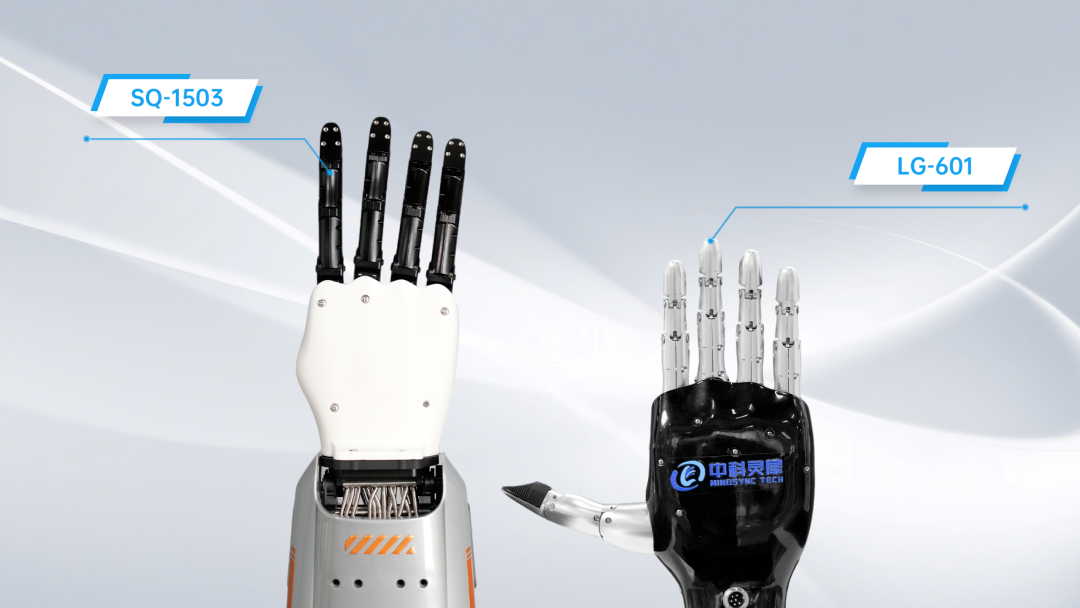
| LG-601 (Linkage-driven Hand): High rigidity, high payload and ultra-long service life for industrial handling and heavy-load assembly. Versatile and above all reliable.
| SQ-1503 (Tendon-driven Hand): High biomimicry, abundant DOFs and compliant fine manipulation, optimized for precision assembly and irregular part processing. It fills the gap where high agility is required.
Neither replaces the other. The right solution is selected based on line requirements. These two routes cover mainstream industrial dexterous manipulation demands. Customers only need to define working conditions, and Zhongke Lingxi delivers a matching solution.
07 The Value of SQ-1503 Lies Not in Spotlight Demos, But On Production Lines
The SQ-1503’s eligibility for line deployment comes from far more than a single tendon, routing scheme or hardware configuration. Every engineering trade-off is backed by a complete underlying technology stack.
Zhongke Lingxi develops motor control, force control algorithms and transmission structures in-house, holding a total of 47 intellectual property rights. Every product iteration is driven by this integrated system.
We believe the true value of dexterous hands is not showcased in spotlight demonstrations, but reflected in stable operation on industrial frontlines. The SQ-1503 is built to exactly this standard: tendon-driven yet far from a toy; flexible yet robust; capable of piano-playing demos, and more importantly, built for real production work.
If your production line is searching for an end effector that flexibly handles multi-variant workpieces, or if you are evaluating tendon-driven hands as alternatives to imported solutions, please contact us to verify the real-world line performance of the SQ-1503.